Archives
-
An-Nahdhah: Journal of Education and Culture
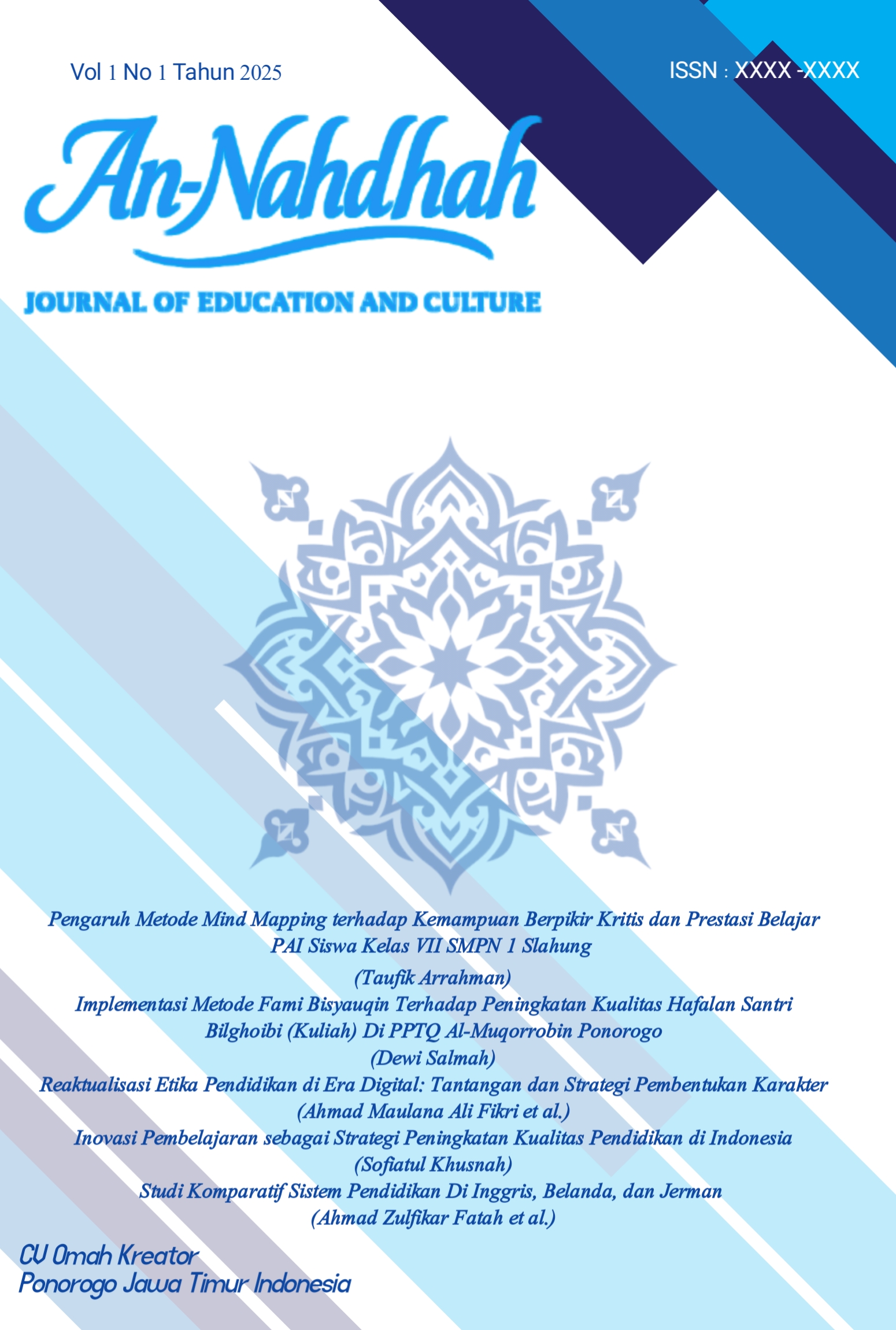
Vol. 1 No. 1 (2025)This edition presents five scholarly contributions that reflect the current dynamics and developmental direction of education in Indonesia within contemporary contexts. The first article demonstrates that the application of the Mind Mapping method significantly enhances critical thinking skills and academic performance in Islamic Religious Education at the junior secondary level. The subsequent study on the implementation of the Fami Bisyauqin method within a Qur’an memorization institution confirms its effectiveness in improving bil-ghoibi memorization quality through a structured and intensively supervised approach. Meanwhile, the discussion on the re-actualization of educational ethics in the digital era emphasizes the urgent need to revitalize moral values as the foundational basis for character formation amidst the pervasive influence of technology. The article on learning innovation highlights the necessity of pedagogical transformation as a key strategy to elevate national education quality in alignment with the objectives of the Merdeka Curriculum and the vision of Society 5.0. Complementing the overall discourse, the comparative study of educational systems in England, the Netherlands, and Germany offers both reflective and inspirational insights for formulating more adaptive and sustainable educational policies in Indonesia.
-
An-Nahdhah: Journal of Education and Culture
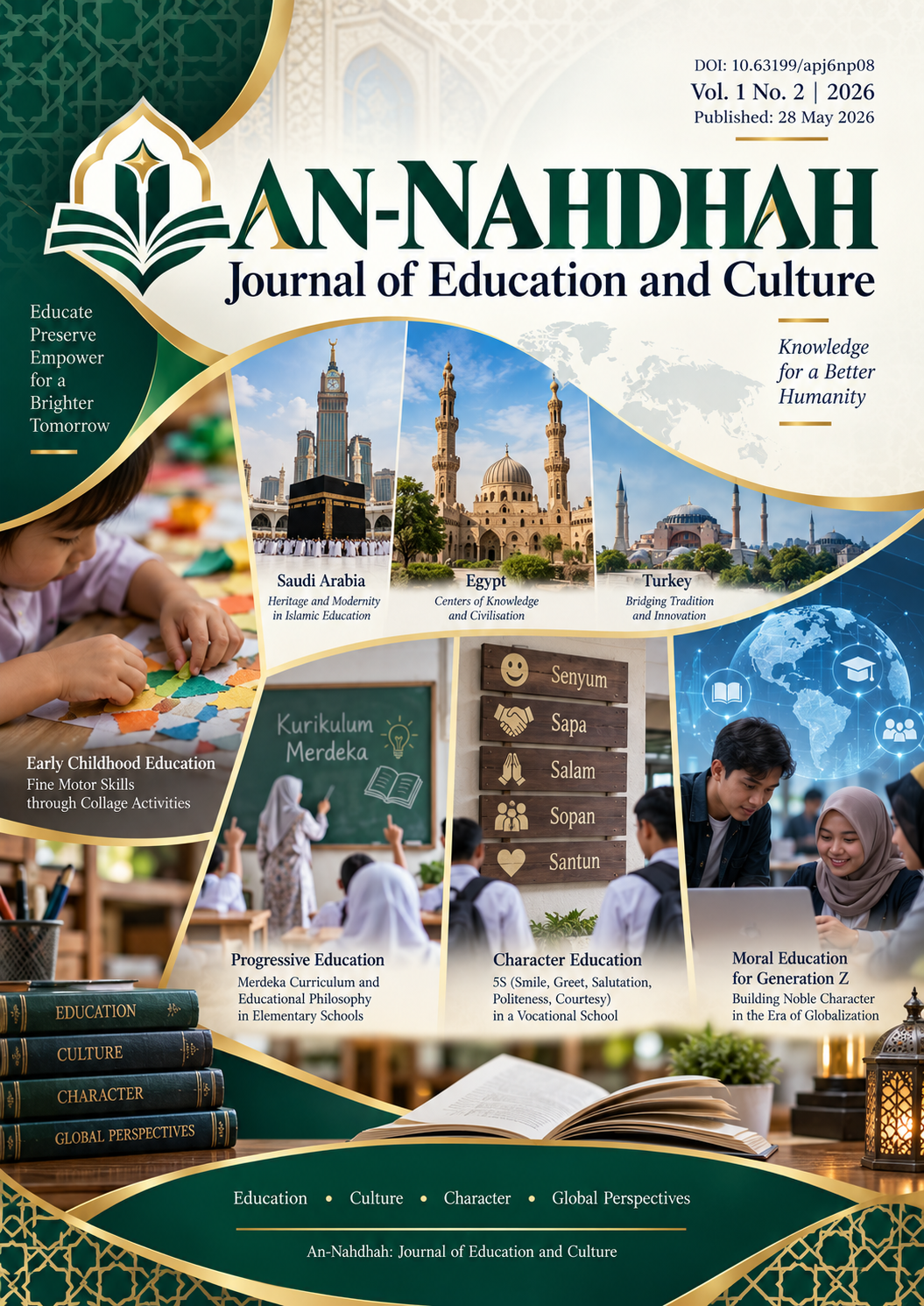
Vol. 1 No. 2 (2026)presents five articles addressing contemporary issues in education, Islamic educational systems, curriculum development, character formation, and moral education. This issue explores the development of young children’s fine motor skills through collage activities, a comparative analysis of Islamic education systems in Saudi Arabia, Egypt, and Turkey, the implementation of the Merdeka Curriculum in elementary schools from the perspective of progressive philosophy, the implementation of the 5S culture—Senyum, Sapa, Salam, Sopan, and Santun—in shaping student character, and moral education as an effort to strengthen the character of Indonesia’s Generation Z in the era of globalization. Collectively, these studies emphasize the importance of innovative learning, educational transformation, character development, cultural values, and moral education in preparing learners to respond to contemporary global challenges.